Listen


 Facebook
 Nextdoor
 X
 WhatsApp
 Email
 Copy link

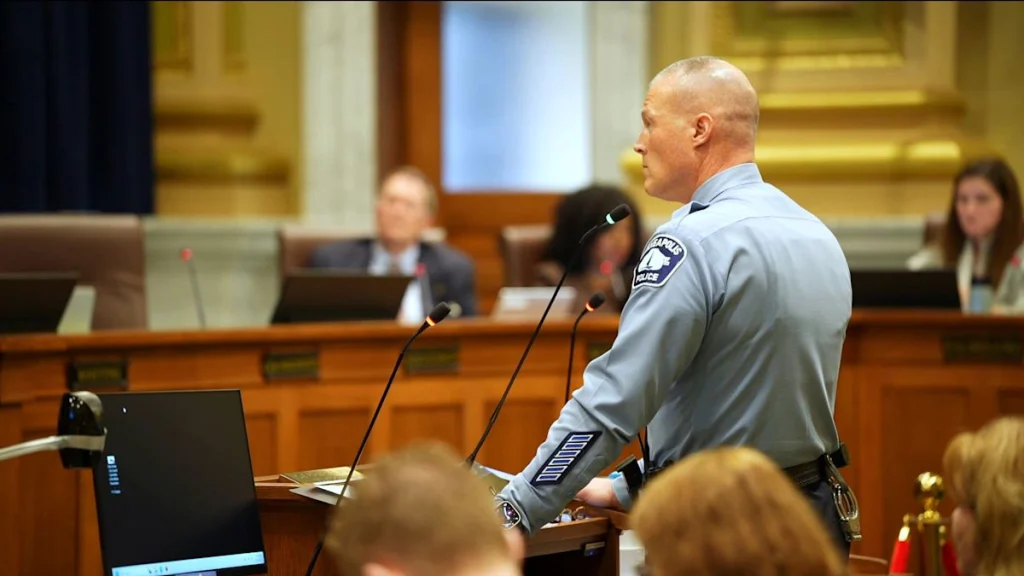
Minneapolis Mayor Jacob Frey vetoed two City Council actions Thursday. He rejected the council’s denial of his police chief nominee. He also vetoed new limits on data centers, Bring Me The News reported.
The vetoes set up a City Council meeting Friday. Members are expected to take up both issues, Bring Me The News reported. Nine votes are needed on the council to override either veto.
What was decided
- Police chief rejection: The council voted 8-5 last week to reject Interim Chief Bill Peterson’s nomination. Peterson was nominated to lead the Minneapolis Police Department permanently, CBS News Minnesota reported. Frey vetoed the rejection and is asking the council to vote again.
- Data center limits: The council voted 7-6 to pass new zoning rules restricting where data centers can be built downtown, MPR News reported. Frey vetoed the ordinance, saying it would create a “de facto ban.”
- A construction moratorium on data centers was put in place in June. It is set to expire Nov. 21, Bring Me The News reported.
Council grilled police chief nominee for hours
Peterson has served as interim chief since Brian O’Hara resigned earlier this year, Yahoo News reported. He is a 31-year veteran of the department.

Council members questioned Peterson for hours. They asked about racist language by officers, use-of-force incidents, homelessness and budget issues, according to Yahoo News.
Peterson told the council he would not tolerate discrimination, racism or sexism. He said he would “deal with them accordingly,” Yahoo News reported.
Council members who opposed Peterson cited the department’s history of biased policing. That history has targeted Native American and Black residents, MPR News reported.
Frey defended Peterson in his veto letter, according to Bring Me The News. “His record speaks for itself, and his integrity and dedication to the City and this department is beyond reproach.”
Frey wrote that confirmations should be based on qualifications. He said nominees should not be judged on “where a department has been.” Instead, they should be judged on where they will take it, MPR News reported.
Any nominee Frey puts forward needs support from at least seven council members. That threshold was set by the city attorney, Bring Me The News reported.
It followed an earlier dispute over Community Safety Commissioner Todd Barnette’s rejected confirmation, Bring Me The News reported. Barnette later announced he will step down at the end of 2026.
The Star Tribune reported Frey has been working behind the scenes. He is trying to secure two more votes for Peterson among council members who initially opposed him.
Data center rules call for overlay districts
The ordinance the council passed combined pieces of a strict staff proposal. It also included amendments favored by some council members. The attempt to pass a full ban on data centers failed, Bring Me The News reported.
The final version would require council approval of each data center through overlay districts. It would also limit new centers to existing buildings in two downtown zoning districts, MPR News reported.
The ordinance also required disclosure of energy, water and generator use. It barred data centers from building on the first or second floor, Fox 9 reported. It also required a sound attenuation plan and a decommissioning plan if a site stops operating.
Centers larger than 50,000 square feet would have had to join an Xcel Energy program. They would also pay extra for renewable energy credits, according to Fox 9.
Frey said the zoning and overlay district standards were “confounding” and would create “inconsistent rules” and “lead to arbitrary rule making,” according to CBS News.
The mayor said he supports the version of the rules originally proposed by city staff. He said he will sign that version immediately, Bring Me The News reported. He called that framework “one of the strictest data center regulatory frameworks in the country,” according to MPR News.
Frey said data centers could help the downtown economy and ease rising property taxes, according to Fox 9. “We have an opportunity to provide an important regulatory framework, embrace economic progress, and alleviate a tax burden for our residents.”
Adam Duininck is CEO of the Minneapolis Downtown Council. He had urged Frey to veto the ordinance earlier in the week, Fox 9 reported.
Duininck pointed to the sale of the Sleep Number building for $235 million, eight times its previous value. That was up from about $30 million, which he credited to AI data center demand, Fox 9 reported.
“It should be a clear process, a clear timeline,” Duininck said, according to Fox 9.
What happens next
The council set aside time at Friday’s meeting. Members plan to address a possible veto of the data center ordinance, Bring Me The News reported. The data center moratorium expires Nov. 21, adding pressure to resolve the dispute before new projects can move forward.
The council also must decide whether to hold another confirmation vote on Peterson. At least two members would need to change their votes. That would let him reach the threshold, Bring Me The News reported.
The disagreements come after the mayor’s office and the council went through mediation this year. That process cost taxpayers more than $1 million, Yahoo News reported.